Independent recommendations for jewelry photography. Ratings combine hands-on use with the product's standing across major retailers and reviews. How we pick. Prices are approximate and change often, so check the retailer for the latest. Some links are affiliate links; we may earn a commission at no cost to you.
Key takeaways
- CRI 95 or above is the single most important spec for jewelry lighting. Lower ratings shift gold and gem color in ways that are hard to fix in post.
- Continuous LED panels let you preview shadows and hotspots before you press the shutter. Strobes deliver more power and cooler heat, but what you see is not what you get.
- A softbox or diffusion panel is not optional for jewelry. Direct hard light creates mirror-like hotspots on polished metal that bury detail.
- Dimmer control matters. You need to pull back output for small pieces without changing color temperature.
What matters in jewelry lighting
Lighting a ring or necklace is more demanding than lighting a portrait or product on a shelf. The surfaces are reflective, the color of the material is the product, and the margins for error are small. Four things separate a kit that works from one that frustrates you.
Color accuracy first. Metal and gemstone color shifts under light sources with poor color rendering. A gold ring under a 90 CRI source looks slightly greenish or orange depending on the fixture. A sapphire can read purple or navy. CRI (Color Rendering Index) quantifies how faithfully a light renders color compared to a reference. For jewelry, 95 is the floor, not a nice-to-have.
Light quality over raw output. A 1000-watt source aimed bare at a ring produces a blown-out reflection and no visible surface texture. A 200-watt source behind a large diffusion panel produces soft, wrapping light that reveals facets and finish. Output numbers on spec sheets mean little without knowing how the light is shaped and softened.
Modifier system. Look for kits that include or are compatible with softboxes, scrims, or diffusion tents. Strip softboxes work well for bangles and chains. Octaboxes suit rings and pendants. A light tent or diffusion cube is the easiest entry for polished metal.
Dimmer and color temperature stability. When you dim a light, the color temperature must not shift. Many cheaper LED panels warm noticeably as output drops, which means your white balance is a moving target across a shoot.
High CRI 95+
The threshold for accurate metal and gemstone color. Below this, post-correction cannot fully recover the original hue.
Continuous vs strobe
Continuous panels show you the result in real time. Strobes offer more power and less heat for longer sessions.
Softboxes and diffusion
Hard bare light creates hotspots on polished metal. Large diffusion surfaces produce gradual, detail-preserving gradients.
Output control
Stepless dimming lets you tune intensity for small pieces. Confirm color temperature holds steady across the dimming range.
Continuous LED vs strobe for jewelry
Most jewelry photographers starting out lean toward continuous LED, and for good reason. The preview benefit is real: you can see the shadow cast by a prong, the hotspot on a bezel, and the catchlight in a stone before you take a single frame. Adjustments are immediate and visible.
Strobes work differently. You set power, take a test shot, review it, and adjust. The workflow is slower for close-up detail work, but strobes produce significantly more output for their size, and they run cool over long sessions. If you are photographing many pieces back to back, heat from continuous panels can become a genuine problem.
For most jewelry photography situations, a pair of continuous LED panels with high CRI and large softboxes delivers excellent results. If your catalog grows to the point where you are shooting for hours at a time, strobe kits become worth evaluating.
By budget tier
Starter: lamp and diffusion
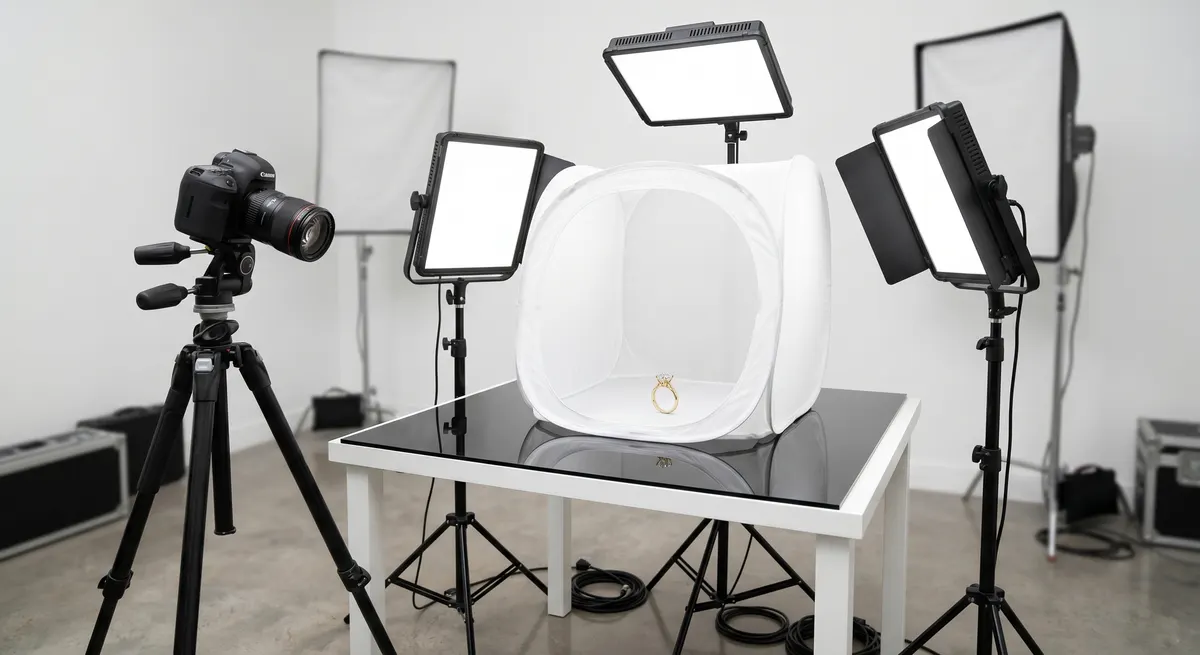
At the entry level, the goal is a single high-CRI continuous source paired with a diffusion tent or collapsible softbox. A diffusion tent is especially forgiving: it surrounds the piece and eliminates harsh reflections from nearly every angle. You can shoot polished metal and faceted gems with minimal frustration. Add a second small fill light or a white card reflector when you need to open up shadows on the far side.
Mid: dual panel kit
A matched pair of continuous LED panels with built-in stands, softbox attachments, and dimmer controls gives you full two-light control. You set a main light from one side and a fill or rim from the other. This tier is where you start dialing in ratios, controlling specular reflections, and getting consistent results across a full catalog shoot. Look for kits that include both a large softbox and a smaller strip modifier.
Full studio: strobe or advanced continuous
A studio-grade setup combines a monolight or strobe head with a large softbox, a dedicated product table, and a secondary fill source. At this level you also gain modeling lights on the strobe heads, which partially restore the preview advantage of continuous light. Some photographers add a ring light or small macro panel as a dedicated gem light to reveal internal fire in faceted stones.
A full two-light continuous setup with high-CRI panels and soft modifiers covers almost everything jewelry throws at you. Our picks below cover a solid option at each budget tier.
Our picks
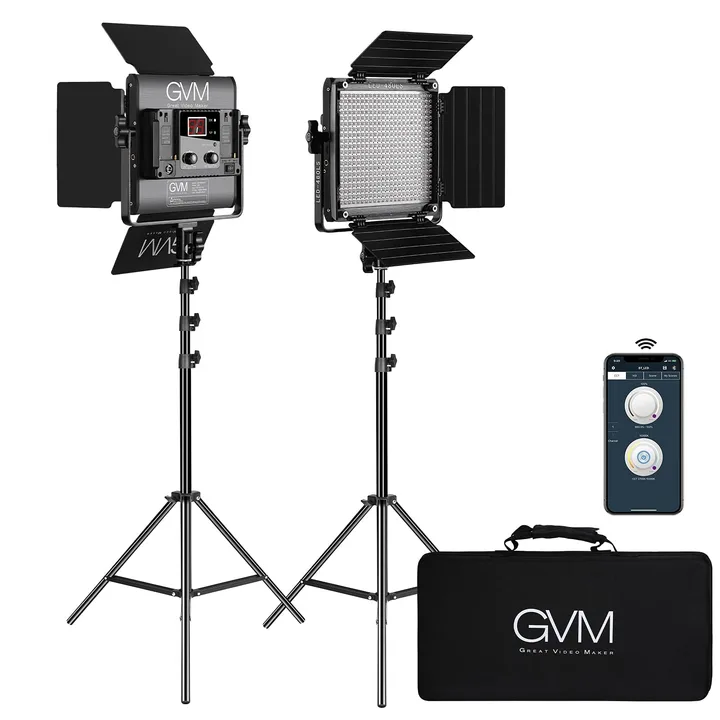
GVM 2-Pack LED Panel Kit
Popular budget pick, CRI 97
Two high-CRI bi-color panels with stands for less than one name-brand light. Enough soft, accurate light to start shooting jewelry well at home.
Who it's for: Home setups on a tight budget
- CRI
- 97+
- Type
- Bi-color LED panel (pair)
- Color temp
- 2700-6800K
- Control
- App and remote
- Mount
- Panel with stands
Pros
- High CRI 97
- Two lights plus stands
- App control
Cons
- Plasticky build
- Less output than COB lights
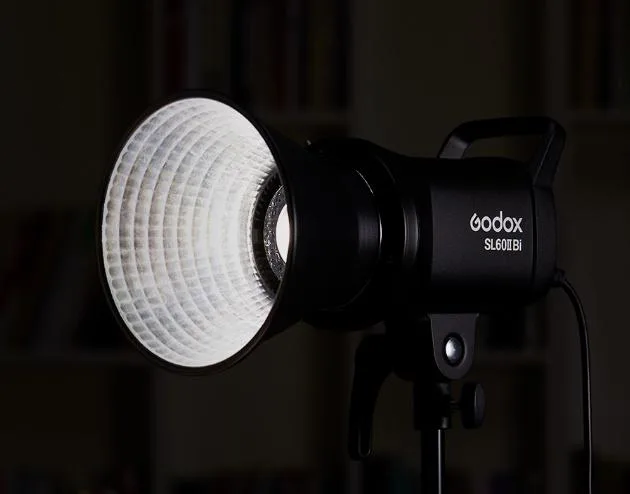
Godox SL60IIBi
Widely recommended all-rounder
The sweet spot of price, power, and color quality. CRI 96+ keeps metal and gem color true, and the Bowens mount takes softboxes for clean, controlled light.
Who it's for: Most jewelry shooters; best value all-rounder
- CRI
- 96+
- Type
- COB LED
- Power
- 70W
- Color temp
- 2800-6500K
- Mount
- Bowens
Pros
- CRI 96+ accurate color
- Bowens mount for modifiers
- Strong value
Cons
- Single light, buy two for a full setup
- Fan noise under load
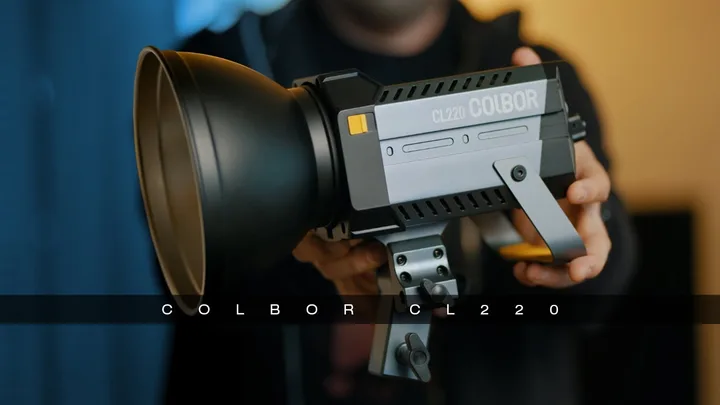
COLBOR CL220
Top color accuracy for product work
High output with excellent color metrics (CRI 96+, strong SSI and TM30) for faithful metal and gemstone rendering. The pick when color fidelity and power both matter.
Who it's for: Studios needing top color fidelity and output
- CRI
- 96+
- Type
- COB LED
- Power
- ~220W
- Color temp
- 2700-6500K
- Mount
- Bowens
Pros
- Excellent color metrics
- High output
- Reliable for studio use
Cons
- Pricier
- Bulkier than a panel
The verdict
For accurate metal color, prioritize CRI 95+ and soft modifiers over raw power. Continuous LED suits most jewelry work because you see the result live. Buy two lights for proper control rather than one expensive one.
Wondering what a shoot costs instead of buying gear? See our jewelry photography pricing guide.