Independent recommendations for jewelry photography. Ratings combine hands-on use with the product's standing across major retailers and reviews. How we pick. Prices are approximate and change often, so check the retailer for the latest. Some links are affiliate links; we may earn a commission at no cost to you.
Key takeaways
- A true macro lens with 1:1 magnification is the single biggest sharpness upgrade for jewelry work.
- Longer focal lengths (90mm to 150mm range) give you more working distance, which makes lighting far easier.
- Optical stabilization helps at moderate magnifications but cannot substitute for a tripod at 1:1.
- Budget-tier macro lenses still outperform kit lenses for close-up jewelry because of their dedicated optical design.
Choosing a macro lens for jewelry photography is one of the highest-return decisions you can make. A general-purpose lens, even a sharp one, loses resolving power the closer you focus. A proper macro lens is designed from the ground up to be at its best at very short distances, which is exactly where jewelry lives.
Why a true macro lens matters
The phrase “macro” gets used loosely on kit lenses and filter attachments, but the only spec that counts is the reproduction ratio. A genuine 1:1 macro lens projects a real-size image of the subject onto the sensor. For a 10mm stone, that means 10mm of sensor coverage, capturing every surface scratch, prong seam, and facet edge that your customers will scrutinize.
Beyond magnification, true macro lenses are corrected for close-focus aberrations. At normal distances, most lenses perform well. Pull them within a few centimetres of a subject and uncorrected lenses show chromatic fringing and field curvature. On a gemstone, that translates to coloured halos around facet edges and soft corners on the stone. A dedicated macro lens keeps contrast and colour neutral across the whole frame at 1:1.
Working distance is the gap between the front of the lens and the subject at maximum magnification. This space is not just physical comfort. It determines how easily you can place a light modifier between the lens and the piece, whether your reflectors can reach the stone without shadowing the lens barrel, and whether you have room to adjust a fill card without nudging the jewellery. Working distance is one of the most practical specs to evaluate.
Buying criteria at a glance
1:1 Magnification
The baseline requirement. Any lens marketed as macro that does not reach 1:1 will limit the detail you can capture on small stones and fine chain links.
Focal Length and Working Distance
Longer focal lengths produce more working distance at 1:1. Short macros can feel cramped in the studio; longer ones give you breathing room for lights and reflectors.
Centre and Corner Sharpness
Look for lenses that perform at f/8 to f/16, the apertures most used for focus stacking. Centre-sharp lenses with soft corners waste sensor resolution on product work.
Optical Stabilisation
Useful when shooting handheld proofs or ambient-light detail shots, but not a substitute for a tripod at 1:1. Stabilisation cannot correct the micro-vibration that ruins fine detail at full magnification.
Focal length choice
Macro lenses for full-frame and crop-sensor cameras span a wide focal length range. Understanding the trade-offs helps you choose the right category for your workflow.
Shorter macro lenses (40mm to 65mm equivalent) are compact and often less expensive. They are a practical choice if you shoot tethered on a copy stand and never need to light from the side, because the lens-to-subject gap is tight but the camera is locked in position anyway. The main drawback is that the front element can sit just a few centimetres from the piece at 1:1, which makes it difficult to squeeze a light source into that gap.
Mid-range macro lenses (85mm to 105mm equivalent) are the most common choice for jewellery studios. They offer enough working distance for a small softbox or a reflector to sit beside the lens, and the longer focal length flatters perspective on three-dimensional pieces. Ring profiles and bracelet clasps are rendered with slightly less distortion than at wider focal lengths.
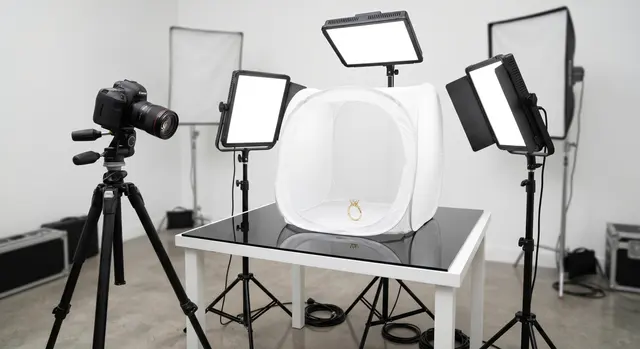
Longer macro lenses (150mm to 200mm equivalent) give the most working distance of all. If you are shooting with a ring light, a tent, or multiple small LED panels, the extra room is genuinely useful. The trade-off is size and weight. These lenses are physically larger, require more substantial tripod support, and cost more. For dedicated jewellery studios with a fixed copy stand setup, the extra reach can be worth it.
Choosing by budget
Entry level: Macro lenses at this tier are often third-party options made for popular mounts. Optical quality at f/8 is typically very good, and 1:1 is standard. Autofocus at close distances can be slow, but for still jewellery on a tripod that is rarely a problem. If you are starting out and want to upgrade from a kit lens without a large outlay, this category will transform your image quality immediately.
Mid range: First-party manufacturer macros and premium third-party designs live here. Build quality improves, focusing motors are faster and quieter (useful if you shoot video or tethered with live view), and optical performance tends to be more consistent from corner to corner. Working distance is usually better than entry-level equivalents of the same focal length.
Professional tier: These are typically longer focal-length macros or premium short macros from the major manufacturers. Weather sealing, precise focus limiters, and the highest resolving power all appear at this tier. For a dedicated jewellery photography business, the long-term return justifies the cost. A well-maintained lens at this level will outlast several camera bodies.
Our picks
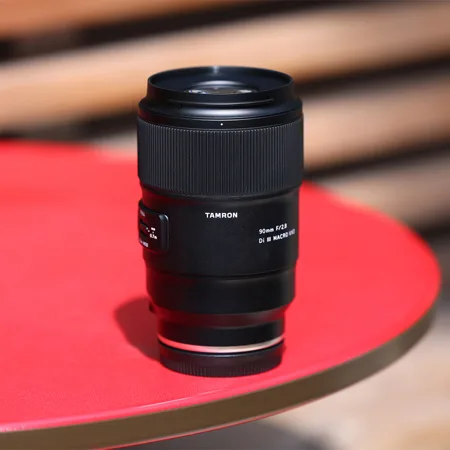
Tamron 90mm f/2.8 Di III Macro VXD
Strong reviews across retailers
True 1:1 macro with professional-level sharpness at a noticeably lower price. The 90mm length gives comfortable working distance for lighting and diffusing around the piece.
Who it's for: Budget shooters who want a true 1:1 macro
- Magnification
- 1:1
- Focal length
- 90mm
- Mount
- Sony E, Nikon Z
- Filter thread
- 67mm
- Weight
- 22.2 oz (630 g)
- Stabilization
- None (use IBIS or tripod)
- Aperture
- 12-blade circular
- Autofocus
- VXD linear motor
Pros
- True 1:1 magnification
- Sharp edge to edge
- Good working distance
Cons
- Fewer mounts than first-party
- Manual focus often needed at 1:1
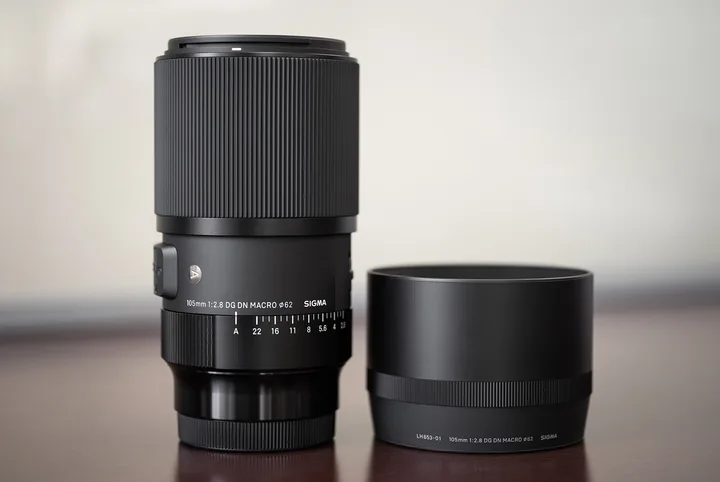
Sigma 105mm f/2.8 DG DN Macro Art
Highly rated value pick
Optics comparable to first-party L-series at a lower price. The 105mm length adds working distance, which makes diffusion and lighting around the piece easier.
Who it's for: Most jewelry studios wanting value and working distance
- Magnification
- 1:1
- Focal length
- 105mm
- Mount
- L-Mount, Sony E
- Filter thread
- 62mm
- Weight
- 25.2 oz (715 g)
- Stabilization
- None (use IBIS or tripod)
- Aperture
- 9-blade
- Autofocus
- Stepping motor
Pros
- Excellent sharpness
- Great value versus first-party
- More working distance
Cons
- Heavier
- Manual focus often needed at 1:1
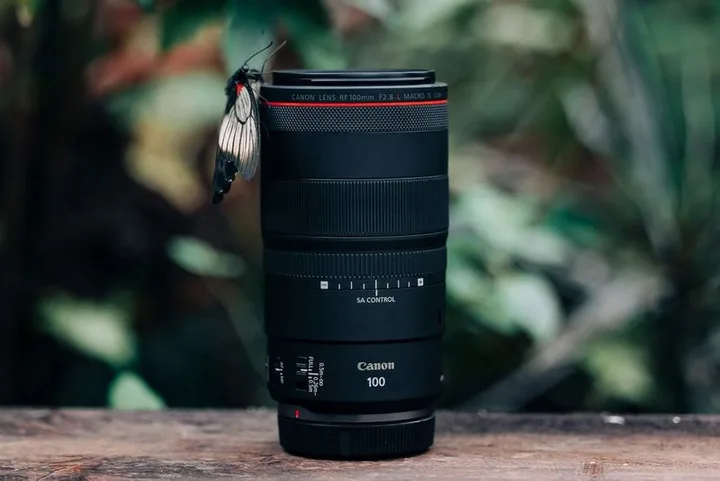
Canon RF 100mm f/2.8L Macro IS USM
Top-rated native macro
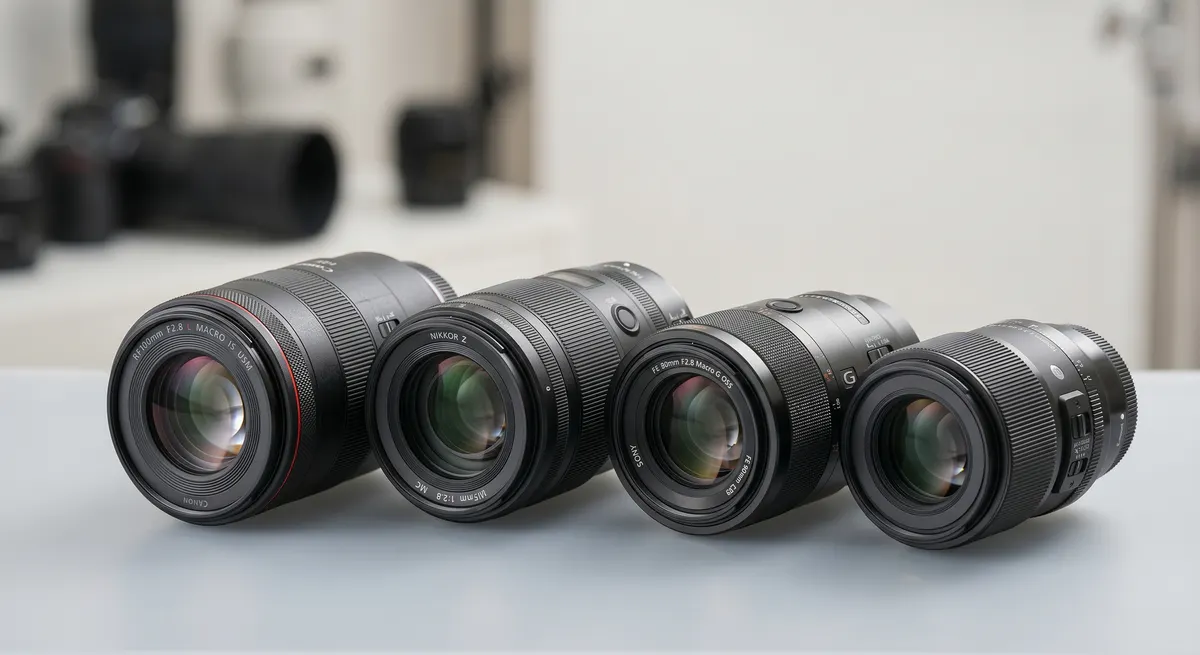
Reference-grade sharpness, up to 1.4x magnification, and 5 stops of stabilization. The pick for Canon RF shooters who want the best detail with handheld flexibility. Sony shooters: the FE 90mm f/2.8 G is the equivalent.
Who it's for: Canon shooters wanting the sharpest native macro
- Magnification
- 1.4x
- Focal length
- 100mm
- Mount
- Canon RF
- Filter thread
- 67mm
- Weight
- 25.7 oz (730 g)
- Stabilization
- 5-stop hybrid IS
- Aperture
- 9-blade
- Autofocus
- Dual Nano USM
Pros
- Up to 1.4x magnification
- 5 stops stabilization
- Reference sharpness
Cons
- Premium price
- Canon RF mount only
The verdict
A true 1:1 macro lens matters more than the camera body for jewelry. Stay in the 90mm to 105mm range for comfortable working distance, then prioritize sharpness. Match the mount to your camera.
Wondering what a shoot costs instead of buying gear? See our jewelry photography pricing guide.