
What a Polarizing Filter Actually Does
Light bouncing off a non-metallic surface such as a gemstone facet, glass, or a polished plastic display surface tends to travel in one plane. A polarizing filter blocks light oscillating in that plane while passing everything else. The result is a reduction in surface glare and a stronger view of what is underneath.
For gemstones, this is significant. A faceted sapphire or emerald has flat, mirror-like facets that bounce light back at the camera as a bright white wash. Once you cut that surface reflection with a polarizer, the color and interior depth of the stone become visible. The blue that the marketing team promised actually shows up in the image.
For metal, the effect is more limited because bare metal reflects polarized and unpolarized light in a mix that a single filter cannot cleanly separate. The polarizer is a gemstone tool more than a metal tool, though it still cuts glare from any non-metallic surface in the scene.
Key takeaways
- A polarizing filter cuts surface glare on gemstones and reveals interior color
- Cross polarization (film on lights plus filter on lens) gives the strongest glare removal
- Polarizers absorb roughly 1.5 to 2 stops of light, so compensate with exposure or extra light
- Dialing the filter back is essential for diamonds, which need some surface reflection to show sparkle
Circular Polarizer on the Lens
The simplest approach is a circular polarizing filter (CPL) threaded onto the front of the lens. This is the same filter landscape photographers use to darken skies over water. For jewelry, it works as a first line of defense against surface glare without changing your lighting at all.
To use it, fit the filter and rotate the outer ring while watching the piece in live view. You will see glare rise and fall as you turn. Stop when the reflection is minimized without the image looking unnatural. A single CPL on the lens cuts glare from non-metallic surfaces within roughly a 90-degree cone around the lens axis. Glare from surfaces at steep angles to the lens benefits less.
The limitations are real. A lens-only polarizer has no power over reflections that come from light striking the stone at angles well outside its coverage window. Strong light from directly above a gemstone can still blow out facets even with a CPL fully rotated, because the reflected ray is not traveling toward the lens in a way the filter intercepts efficiently. That is where cross polarization becomes necessary.
Cross Polarization: Film on the Lights, Filter on the Lens
Cross polarization is the complete technique. Instead of only filtering what reaches the sensor, you also polarize the light before it leaves the source. The two polarizing elements are then set at 90 degrees to each other (crossed), which together block almost all surface reflections while allowing transmitted light from inside the stone to pass through.
Here is the setup:
- Tape or mount polarizing film sheets over each light source. These are sold as gel-style sheets and are inexpensive. One sheet per light is sufficient.
- Fit the CPL on the lens.
- Shoot in live view, then rotate the lens filter while watching the stone until glare disappears.
When the filters are crossed correctly, the surface of the stone goes almost dark and the internal color of the gem glows. A blue sapphire turns a deep, saturated blue. A red ruby shows its true red without a white veil across the facets. An emerald reveals inclusions and color zoning that were hidden under surface glare.
Polarizing film over lights
Inexpensive gel sheets placed over each source polarize the light before it hits the stone. One sheet per light head is enough.CPL on the lens
The lens filter intercepts reflected light. Rotate it while watching live view until glare collapses.Crossed at 90 degrees
The film and the filter must be oriented perpendicular to each other for maximum glare cancellation.Even, diffused sources
Cross polarization works best with large, even light sources. Hot spots from bare bulbs burn through the film and create uneven polarization.How to Dial It In
Rotating the CPL is not a binary choice between maximum and minimum polarization. The filter covers a smooth range, and the right position depends on the stone and the shot.
Start at maximum polarization to see the strongest possible glare reduction. Then rotate the filter back toward the midpoint while watching the stone. At maximum, the stone may look flat or slightly artificial because there is no surface character left. As you rotate back, some surface highlight returns, and with it the sense that the stone is three-dimensional and has a surface rather than just a color mass.
Stop when the image looks right, not at any particular filter position. The goal is a stone that reads as a real, physical object with beautiful color, not a computer-generated gradient.
For colored gemstones set in metal, the metal will show the combined effect of your polarization on its surface too. Gold and silver reflect from their metallic surface rather than transmitting, so they respond differently from the stone. You may need to flag cards alongside the polarization setup to keep the metal looking polished rather than dull.
The Trade-Off With Sparkle
Cross polarization does something troubling to diamonds. A diamond’s brilliance, fire, and scintillation all depend on light bouncing off and through the facets in ways that produce the characteristic sparkle. Cross polarization removes a large proportion of that reflected light. A fully cross-polarized diamond often looks grey, flat, and dead.
Cross polarization is better suited to colored gemstones where interior color is the point of the image, and where a reduction in surface glare reveals something worth seeing. For a diamond, the surface is the whole show.
Exposure Compensation
A polarizing filter absorbs light. The amount depends on the filter angle, but you should plan on losing approximately 1.5 to 2 stops compared to shooting without the filter. With polarizing film also covering the lights, the overall light level drops further because the film absorbs another stop or so before the light even reaches the stone.
The practical result is that you will need to either:
- Increase exposure time (works for static product shots with the camera on a tripod)
- Open the aperture (check that depth of field is still adequate for the piece)
- Raise ISO (fine on modern cameras at ISO 400 or 800, less so above that)
- Add more lights or move lights closer to compensate for the film absorption
Do not try to recover the lost exposure in post-processing if you can avoid it. Lifting a severely underexposed raw file introduces noise and color inaccuracy that can undo the gains from polarization. Add enough light at the source to keep the exposure at a sensible starting point.
When to Use a Polarizer, and When to Skip It
Use a polarizing filter when:
- A colored gemstone is blowing out to white on the facets and the interior color is not visible
- A glass or crystal display surface is reflecting the room into the shot and cannot be removed
- You need to show inclusions or internal features of a stone that are hidden under surface glare
- The brief calls for the stone to appear as saturated and rich as possible
Skip the polarizer when:
- You are photographing diamonds where sparkle and fire are the product
- You are shooting highly polished metal and want defined specular highlights that show the surface quality
- Light levels are already low and you cannot add more without changing the setup
- The glare you are trying to remove can be fixed faster with a flag card or a diffusion panel, since those add no exposure penalty
A polarizing filter is a precision tool, not a default setting. Most jewelry sessions do not need one. When you do need it, there is nothing else that produces the same result.
For a full guide to managing glare without polarizing filters, see control reflections in jewelry photography. For colored-stone-specific lighting techniques, visit the guide on how to photograph gemstones. For an overview of the full workflow from setup to export, see the jewelry photography guide.
Frequently Asked Questions
What does a polarizing filter do for jewelry?
It cuts surface glare and reflections and can deepen gemstone color. Cross polarizing the lights and lens gives the strongest effect.
Will a polarizer remove all sparkle?
Too much polarization can flatten a diamond. Dial it back so you keep some life in the stone.
Related guides
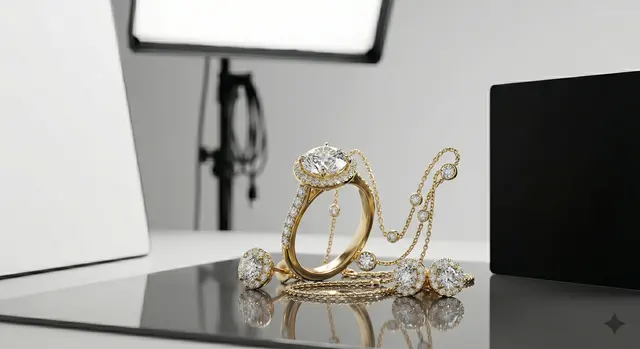
How to Eliminate Glare & Reflections on Jewelry
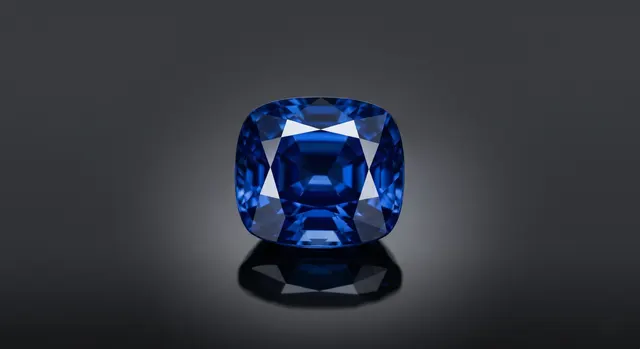
How to Photograph Gemstones
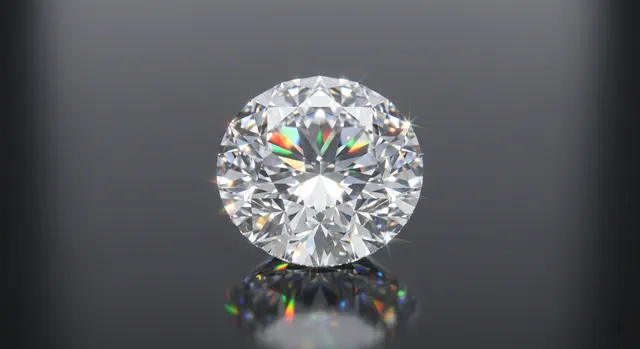
How to Photograph Diamonds
Keep exploring: the complete guide, gear reviews, pricing, or find a photographer.