Independent recommendations for jewelry photography. Ratings combine hands-on use with the product's standing across major retailers and reviews. How we pick. Prices are approximate and change often, so check the retailer for the latest. Some links are affiliate links; we may earn a commission at no cost to you.
Key takeaways
- Interactive 360 spins and spin videos reliably lift conversion on product pages versus static images alone.
- A turntable automates the tedious part: rotating the piece a precise amount between every frame.
- For jewelry, pair the turntable with even, wraparound light - uneven light makes the spin flicker.
- You can produce studio-quality spins for the price of a single mid-range lens; you do not need a five-figure system.
A 360 spin lets a shopper drag to rotate a piece and see it from every angle, the closest thing to picking it up in a store. For jewelry sold online, where the buyer cannot touch the item, that extra confidence translates directly into sales. Spin-enabled listings consistently outperform static-only listings, and the hardware to make them is now genuinely affordable.
Why 360 matters for jewelry specifically
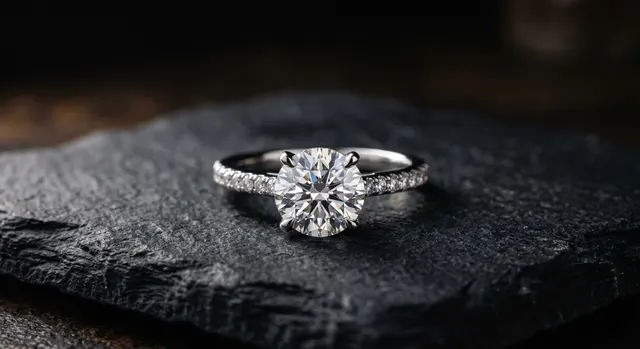
Jewelry is bought on detail and trust. A ring photographed from one angle hides the profile, the gallery, the side stones, and the finish on the band. A spin shows all of it in a few seconds, answering the exact questions that otherwise turn into returns or abandoned carts. The same capture also exports as a short looping video - ideal for product pages, Instagram, and TikTok, where motion stops the scroll.
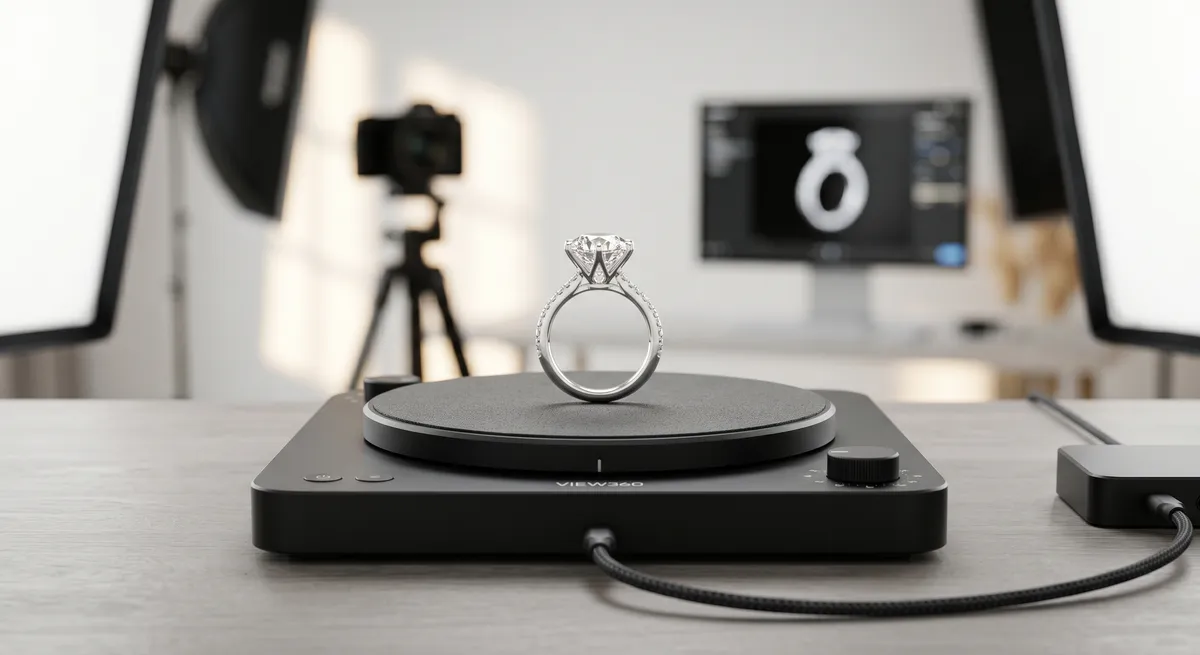
A motorized turntable solves the one hard part of producing a spin: rotating the piece by an identical, precise amount between every frame so the final animation is smooth. Doing that by hand is slow and never quite consistent.
What to look for
Smooth, repeatable rotation
Look for adjustable speed and, ideally, app-controlled capture that fires the shutter at set intervals. Consistency between frames is what makes a spin look professional rather than jerky.
Even, wraparound light
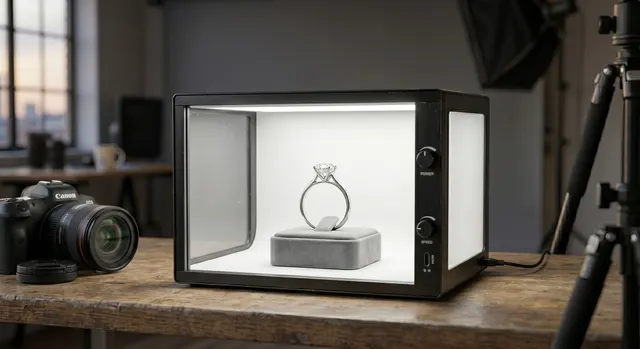
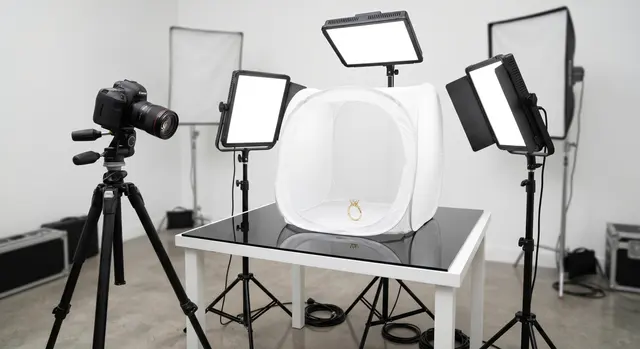
A spin exposes every lighting flaw. A backlit platform plus a light box keeps the background clean white as the piece turns, with no shifting shadows frame to frame.
Right size and capacity
Jewelry is light and small, so capacity is rarely an issue, but a smaller deck keeps tiny items centered and easy to frame tightly.
Phone or camera support
App-based systems let you capture excellent spins on a phone. If you shoot with a camera, confirm the system can trigger it or that your interval can be matched manually.
A note on AI spins
A newer option is software that synthesizes a 360 view from a single photo. It is fast and cheap and can be fine for simple, opaque products. For jewelry, results are still inconsistent - reflections, transparency in stones, and fine detail are exactly what these tools struggle to invent convincingly. A real turntable capture remains the reliable choice when accuracy sells the piece.
Choosing by budget
Entry level: A bare motorized platform. You provide the light and trigger the camera, but it is enough to test whether spins lift your conversions before spending more.
Mid range: App-controlled systems with a built-in backlight. These automate capture and stitching and produce clean, white-background spins with minimal fuss - the right choice for most sellers.
Professional tier: A turntable paired with dedicated wraparound lighting for fast, repeatable results across a full catalog. Fully automated studio systems exist above this, but their cost only makes sense at very high SKU counts.
Our picks
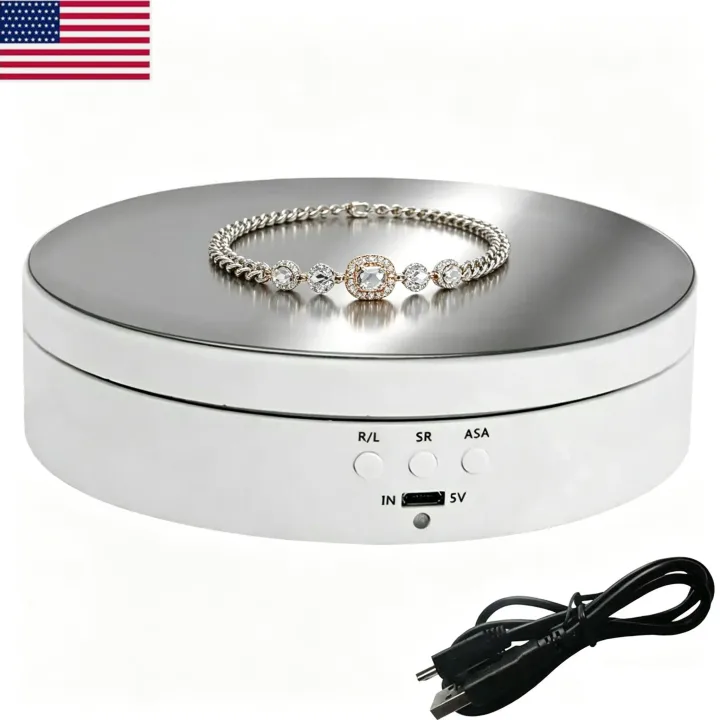
ComXim Motorized Turntable (7.87 in)
Widely used entry-level turntable
A simple, quiet motorized platform with adjustable speed. You supply the lighting and trigger the camera yourself, but for the price it turns any light box into a 360 rig. Great for testing whether spins move the needle for your shop.
Who it's for: Sellers testing 360 before investing
- Diameter
- 7.87 in
- Drive
- Motorized, knob speed control
- Capacity
- Up to 44 lb
- Control
- Manual
Pros
- Very affordable
- Quiet, adjustable speed
- Fits inside most light boxes
Cons
- No app or auto-capture
- You handle lighting and triggering
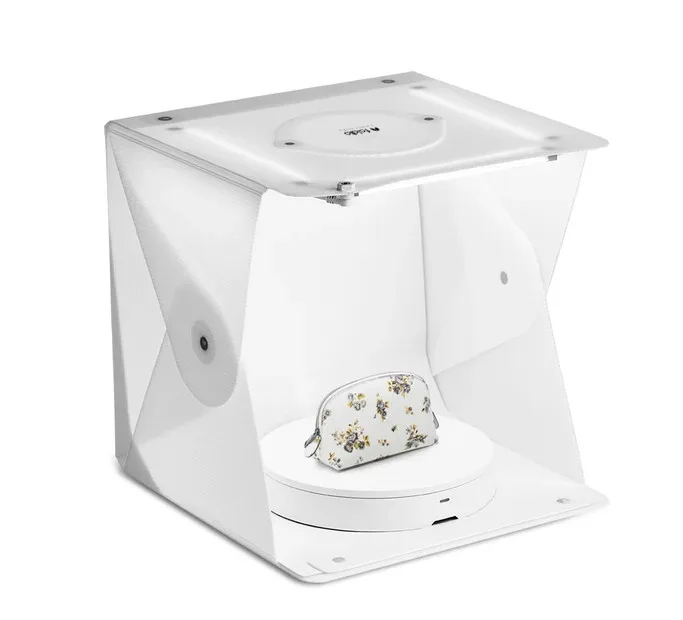
Orangemonkie Foldio360
The standard for small-product 360
Smartphone-controlled capture, a clean Halo Edge backlight that drops out the background to white, and an app that stitches the spin for you. For jewelry it is the practical sweet spot - rings, pendants, and watches all spin cleanly with no stray shadows.
Who it's for: Most sellers adding 360 spins and spin video
- Diameter
- 10.6 in
- Backlight
- Halo Edge, 5700K
- Control
- Smartphone app
- Capacity
- Up to 11 lb
Pros
- App-controlled auto-capture
- Halo Edge backlight for clean white
- Works with phone or camera
Cons
- Best paired with a light box
- Up to 11 lb load
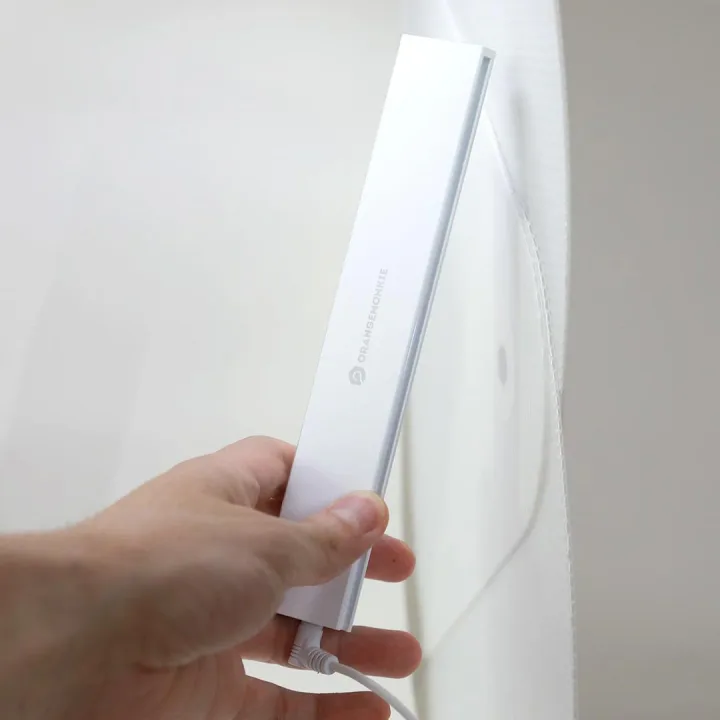
Orangemonkie Foldio360 + Halo Bar
Integrated spin-and-light system
Add wraparound top light to the Foldio360 for fully even, repeatable spins across a whole catalog. This is the realistic pro setup for an in-house jewelry studio. Full automated systems from the likes of Ortery exist, but they run into the thousands and only make sense at very high volume.
Who it's for: In-house studios shooting 360 at volume
- System
- Foldio360 turntable + Halo Bar
- Backlight
- Halo Edge + top bar
- Control
- Smartphone app
- Capacity
- Up to 11 lb
Pros
- Even, repeatable wraparound light
- Fast catalog throughput
- Phone or camera capture
Cons
- Higher cost once bundled
- Overkill for occasional spins
The verdict
Interactive 360 spins and short spin videos consistently lift conversion on product pages, and they are now cheap to produce. For jewelry, the Foldio360 is the sweet spot: smartphone-controlled, evenly back-lit, and big enough for rings through to watches. Start there unless you are shooting at studio volume.
Wondering what a shoot costs instead of buying gear? See our jewelry photography pricing guide.