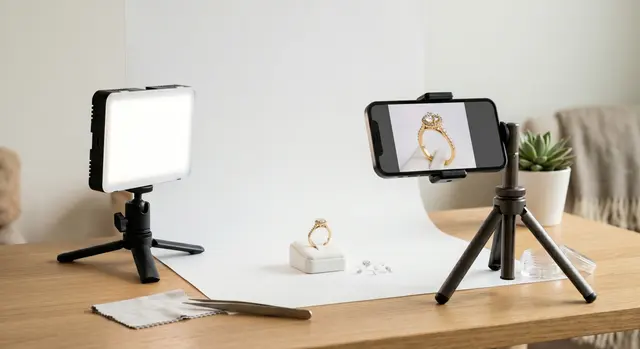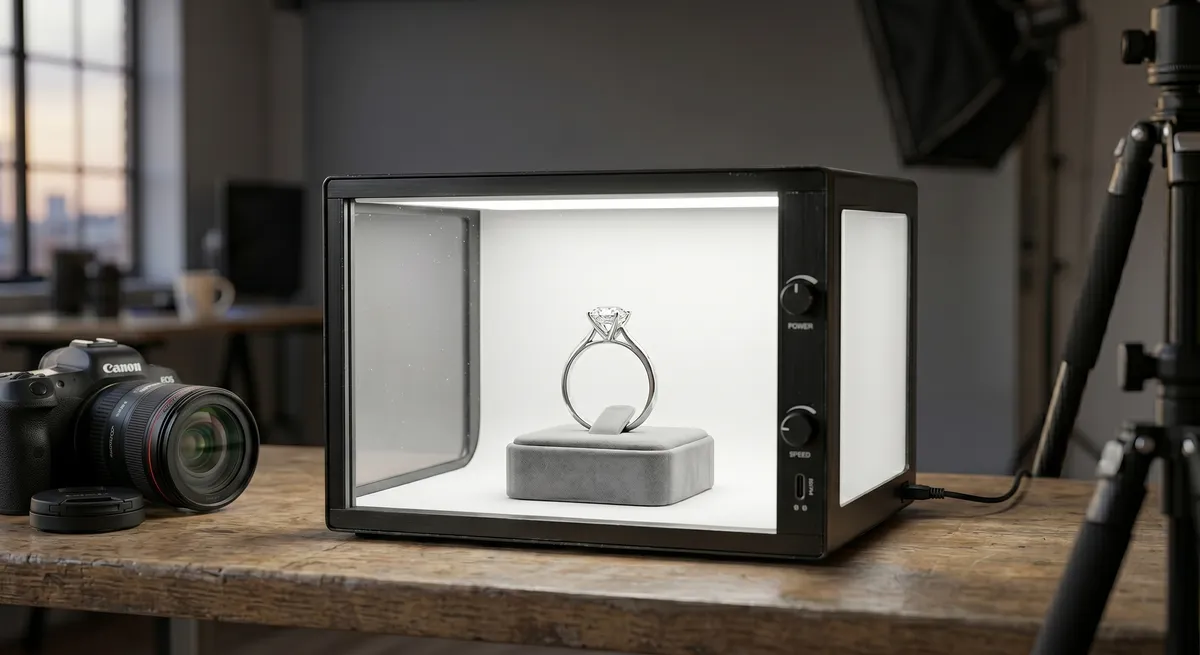
Independent recommendations for jewelry photography. Ratings combine hands-on use with the product's standing across major retailers and reviews. How we pick. Prices are approximate and change often, so check the retailer for the latest. Some links are affiliate links; we may earn a commission at no cost to you.
Key takeaways
- A light box gives you clean, even, shadow-free light with almost no lighting skill required.
- For jewelry, color accuracy (high CRI) matters more than raw brightness - it keeps gold warm and silver neutral.
- Pick the smallest box your pieces fit in; smaller enclosures wrap small items in more even light.
- A box is perfect for white-background catalog shots, but limits styled, editorial, or dramatic looks.
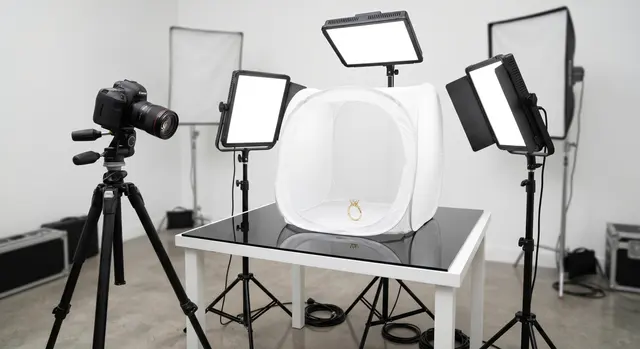
A light box (also called a light tent) is the single easiest way to get professional-looking product photos at home. It is a translucent enclosure that surrounds your piece with soft, diffused light from every direction, which is exactly what reflective metal and faceted stones need. Instead of fighting harsh shadows and mirror-like hotspots, you drop the piece in, and the box does the hard part.
Why a light box works so well for jewelry
Jewelry is difficult precisely because it is small and reflective. Polished metal acts like a curved mirror, so it reflects the room, your hands, and any hard light source as ugly bright spots. A light box solves this by turning the light source into a large, even, wraparound glow. The metal then reflects smooth white walls instead of clutter, and the result reads clean and expensive.
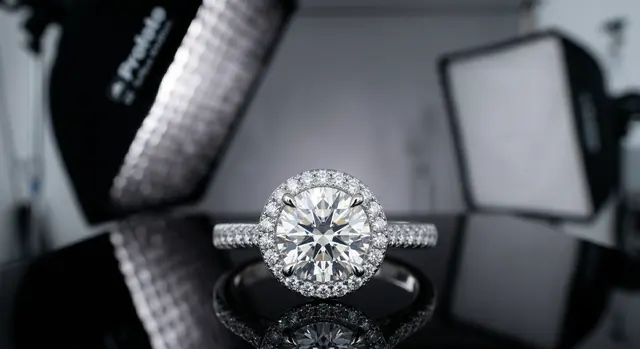
The trade-off is creative control. A box gives you one look - bright, even, white-background product shots - and does it extremely well. It is the right tool for ecommerce and marketplace listings. It is the wrong tool if you want moody, editorial, or styled lifestyle images, which need open lighting and shaped shadows.
What actually matters when choosing one
Color accuracy (CRI)
The most important spec for jewelry. A CRI of 95+ keeps gold, rose gold, and silver true to life. Cheap boxes with low-CRI LEDs make metals look brassy or grey, which means more editing later.
Size
Counterintuitively, smaller is often better for jewelry. A box just larger than your pieces wraps them in more even light. Buy the smallest size that comfortably fits a ring box or a draped necklace.
Built-in vs add-your-own light
All-in-one boxes with built-in LEDs are simplest. Open tents that you light yourself give more control but need separate lights - see our lighting kit guide.
Expandability
If you plan to add 360 spin video later, a modular system that accepts a turntable and extra light bars saves buying twice.
Light box or open lighting?
A light box and a two-light open setup are not really competitors - they serve different jobs. The box is faster, more forgiving, and ideal for high-volume white-background work where consistency is everything. Open lighting with softboxes gives you full control over shadows and highlights for editorial and luxury imagery, at the cost of a steeper learning curve.
Most sellers should start with a box. Once you outgrow the single look it produces, add open lighting rather than replacing the box - keep it for fast catalog days.
Choosing by budget
Entry level: Self-lit folding tents with built-in LED strips. They are cheap and genuinely useful for getting started, but the LEDs are usually lower CRI, so expect to correct color in editing. Fine for a first batch of listings.
Mid range: This is where jewelry sellers should aim. High-CRI LED panels (95+), dimmable output, and fast magnetic folding make these a pleasure to use and dramatically cut editing time because the color is right in camera.
Professional tier: Modular systems that expand with extra light bars and a 360 turntable. The value is not just a bigger box - it is a platform you can grow into for spins, video, and larger pieces without rebuying.
Our picks
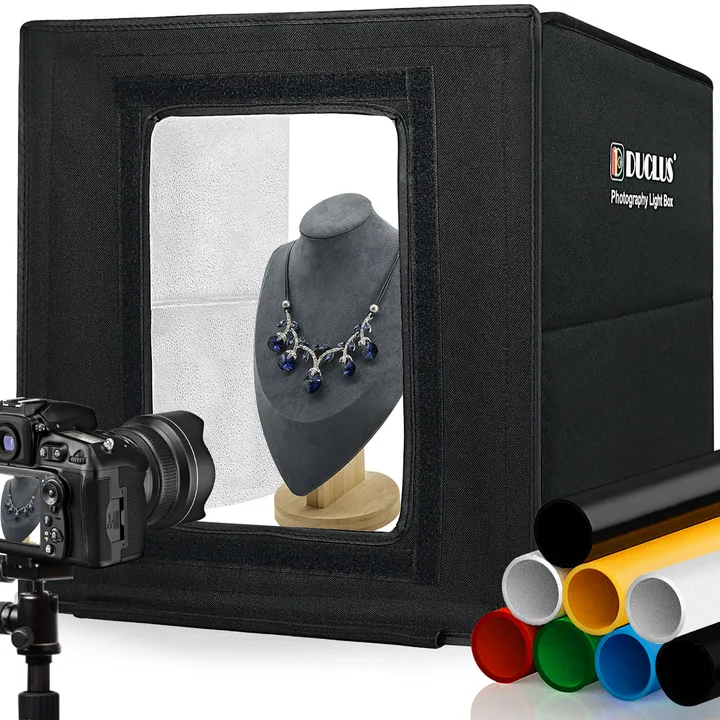
Neewer Photo Studio Light Box (16 in)
Popular budget pick across major retailers
A self-lit folding tent with built-in LED strips and a few swappable backdrops. It will not match a high-CRI box for color accuracy, but it gets a beginner to clean, evenly lit shots on day one for the price of a few coffees.
Who it's for: First-time sellers testing the waters
- Size
- 16 x 16 in
- Lighting
- Built-in LED strips
- Backdrops
- Multiple colors included
- Power
- USB
Pros
- Very low cost
- Built-in LEDs, no extra lights needed
- Folds flat
Cons
- Lower CRI - color can shift slightly
- Plastic build
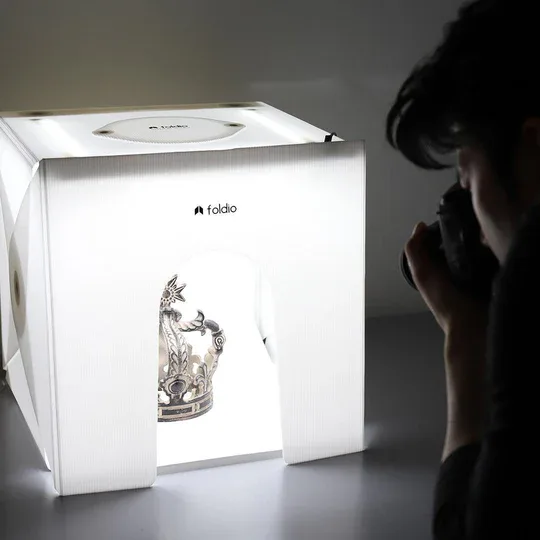
Orangemonkie Foldio2 Plus (15 in)
Highly rated; studio favorite for small products
Magnetic, folds in seconds, and the dimmable LED top panel is CRI 97+, so yellow gold reads warm and white metals stay neutral. The single most important spec for jewelry is color accuracy, and this is where the Foldio pulls clearly ahead of generic tents.
Who it's for: Most jewelry sellers wanting accurate color and fast setup
- Size
- 15 x 15 in
- Lighting
- 45W LED panel, CRI 97+
- Dimmable
- Yes
- Backdrops
- White and black included
Pros
- CRI 97+ for true metal and gem color
- Dimmable LED panel
- Magnetic, folds flat in seconds
Cons
- Light panel sold as part of the kit, confirm what is included
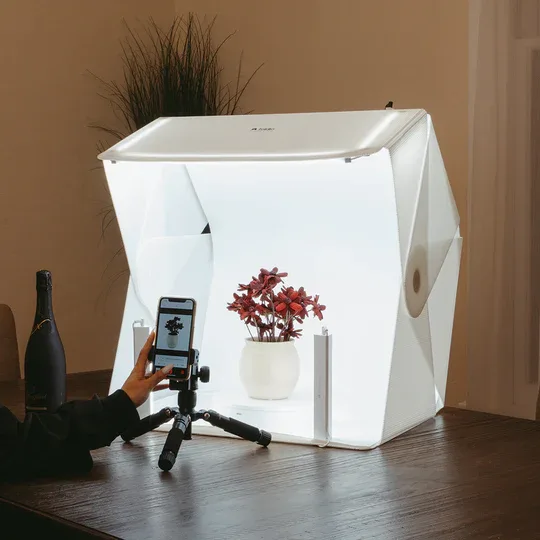
Orangemonkie Foldio3 (16 in)
Top-rated expandable system
Bigger, modular, and built to grow - add a Halo Bar for wraparound light or a turntable for 360 spins. For a studio shooting volume across rings, watches, and larger pieces, the expandability and consistent high-CRI light justify the step up.
Who it's for: Studios shooting volume or larger pieces
- Size
- 16 x 16 in (expandable)
- Lighting
- High-CRI LED, expandable
- Accessories
- Halo Bar, Foldio360 turntable
- Backdrops
- White and black included
Pros
- Larger, modular system
- Add-on lighting and 360 turntable support
- High-CRI, even light
Cons
- Pricier once you add accessories
- Bulkier folded
The verdict
A light box is the fastest way to get clean, consistent product shots without building a lighting rig. For jewelry, prioritize high-CRI LEDs for true metal and gem color, and pick the smallest box that fits your pieces - smaller boxes light small items more evenly. The Foldio2 Plus is the value sweet spot.
Wondering what a shoot costs instead of buying gear? See our jewelry photography pricing guide.