Independent recommendations for jewelry photography. Ratings combine hands-on use with the product's standing across major retailers and reviews. How we pick. Prices are approximate and change often, so check the retailer for the latest. Some links are affiliate links; we may earn a commission at no cost to you.
Key takeaways
- Jewelry is shot at small apertures and slow shutter speeds, so a tripod is essential - handheld shake destroys fine detail.
- The feature that matters most for jewelry is a center column that swings horizontal, enabling overhead flat lays without a boom arm.
- A tripod is also what makes focus stacking possible: the camera must not move a hair between frames.
- Prioritize rigidity over height and fancy features; a stable platform is the entire job.
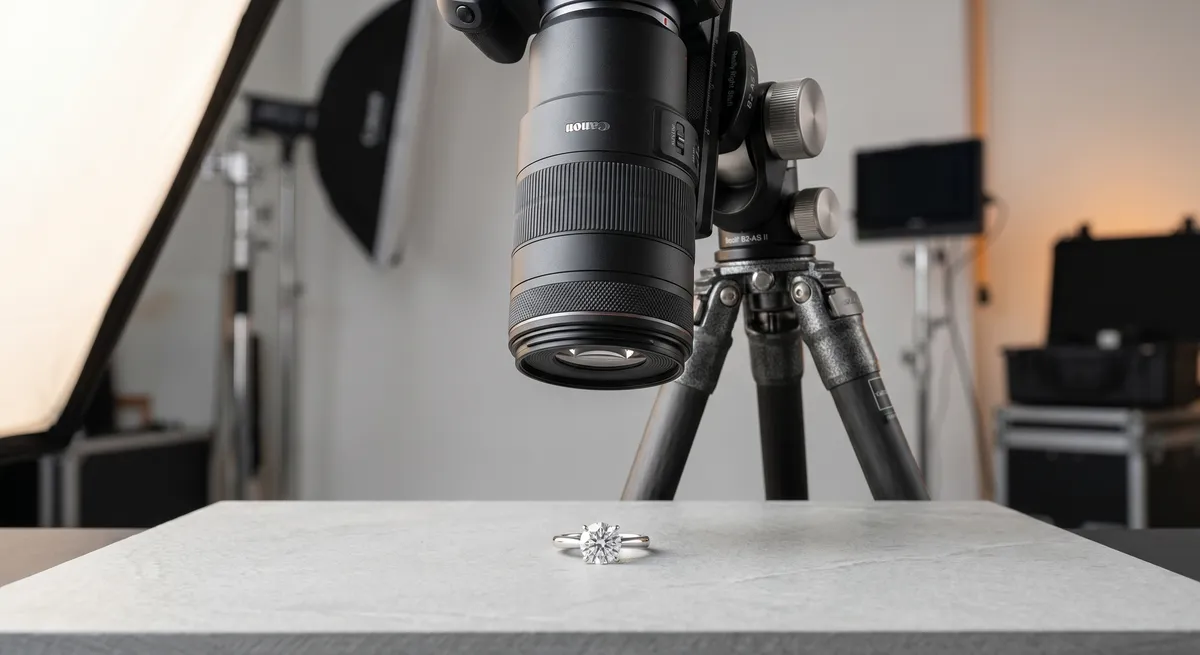
A tripod feels like the least exciting purchase in a jewelry kit, and it is one of the most important. At the small apertures and slow shutter speeds jewelry demands, even the steadiest hands introduce blur that smears the fine detail buyers zoom in to inspect. Lock the camera down and that detail snaps into focus. A tripod is also the prerequisite for focus stacking, where dozens of frames must align perfectly.
Why jewelry needs a tripod more than most subjects
To get a whole ring or pendant sharp front to back, you shoot at f/11 to f/16. That little aperture lets in little light, so the shutter stays open longer - often a fraction of a second or more under studio LEDs. Handheld, that is guaranteed motion blur at macro magnification. On a tripod, you can use base ISO and any shutter speed you like, and the image is clean and razor sharp.
The second reason is repeatability. Catalog work means matching the framing and angle across a whole collection. A locked-down tripod lets you swap pieces in and out of an identical composition, which is impossible handheld.
The overhead question
Horizontal center column
The single most useful jewelry feature. A column that rotates or flips to horizontal puts the camera directly above the surface for flat lays - no expensive boom arm required.
Rigidity over height
A short, stiff tripod beats a tall, wobbly one for product work. Look for thicker leg sections and minimal flex when you press down on the mounted camera.
A good head
A smooth ball head with an Arca-type quick-release makes precise framing fast. Geared heads are even more precise for fine adjustments if your budget allows.
Load capacity headroom
Rated loads are optimistic. Choose a tripod rated well above your camera-plus-lens weight so it stays rock solid, not at its limit.
Flat-lay and overhead compositions are a staple of jewelry photography - chains arranged in a pattern, earrings styled on a textured surface, a ring among props. Getting directly above the surface used to mean an expensive boom arm or a copy stand. A tripod with a horizontal center column does the same job for far less, which is why it tops our criteria list.
Choosing by budget
Entry level: Aluminum tripods with a rotating center column and an included ball head. They flex under heavier rigs but get you overhead and stable for a modest outlay - a big upgrade over handheld.
Mid range: Sturdier legs and a genuinely versatile multi-angle column, with a quality head included. This is where most jewelry studios should land: stable enough for any camera-and-macro combination, flexible enough for overhead and low angles.
Professional tier: Reference-grade legs built for daily studio use, with a quick horizontal column. You buy the head separately and choose exactly the head you want. The rigidity and longevity pay for themselves in a working studio.
Our picks
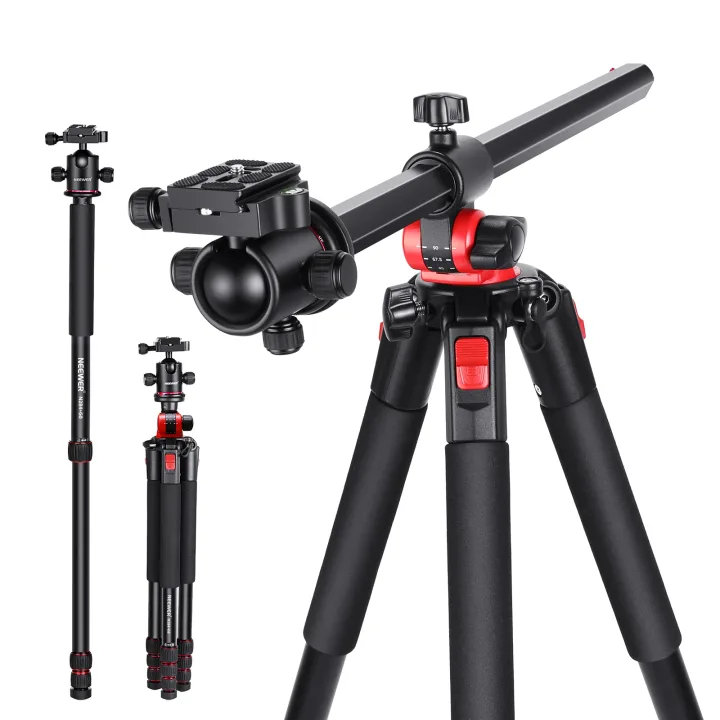
Neewer 72 in Tripod with Horizontal Column
Popular budget overhead pick
A tall aluminum tripod whose center column rotates to horizontal, so you can shoot flat lays from directly above without a separate boom. Includes a ball head and Arca-type plate. Not the sturdiest under heavy rigs, but excellent value for getting overhead and locked down.
Who it's for: Beginners who want overhead capability cheaply
- Max height
- 72 in
- Center column
- Rotates to horizontal
- Head
- Ball head, Arca-type QR
- Load
- Up to 33 lb (rated)
Pros
- Horizontal column for overhead shots
- Ball head and QR plate included
- Tall, folds to travel size
Cons
- Aluminum flexes under heavier setups
- Ball head is basic
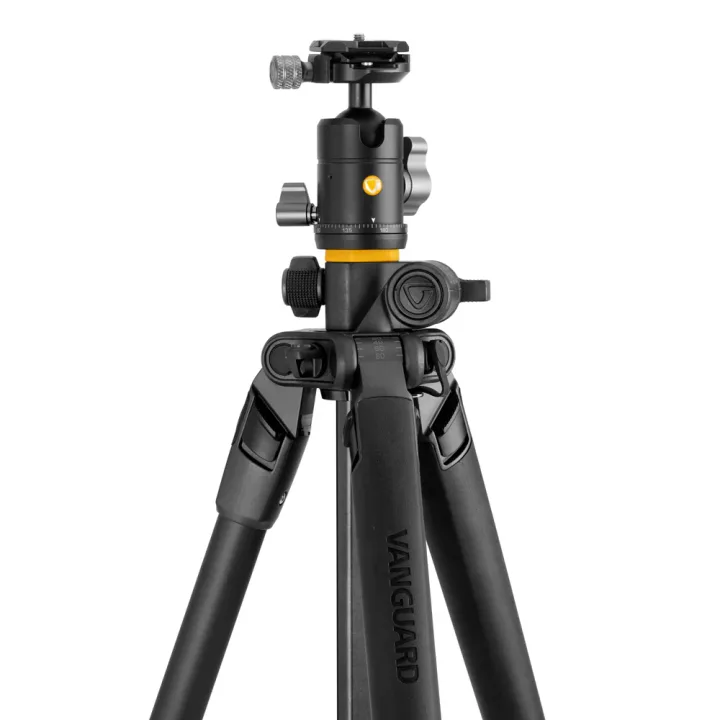
Vanguard Alta Pro 2+ 263AB
Highly rated multi-angle column
The Multi-Angle Center Column moves from vertical to fully horizontal and to angles in between, which makes overhead and awkward low macro angles easy. Sturdier than budget options, with a quality ball head included. The best all-round jewelry tripod for most studios.
Who it's for: Most jewelry studios wanting overhead plus stability
- Center column
- Multi-angle, 0-180 degrees
- Head
- Alta ball head included
- Legs
- Aluminum, 26mm
- Load
- Up to ~15 lb
Pros
- Multi-angle column (overhead and tilted)
- Sturdy, quality ball head included
- Holds a camera plus macro lens with no sag
Cons
- Heavier than travel tripods
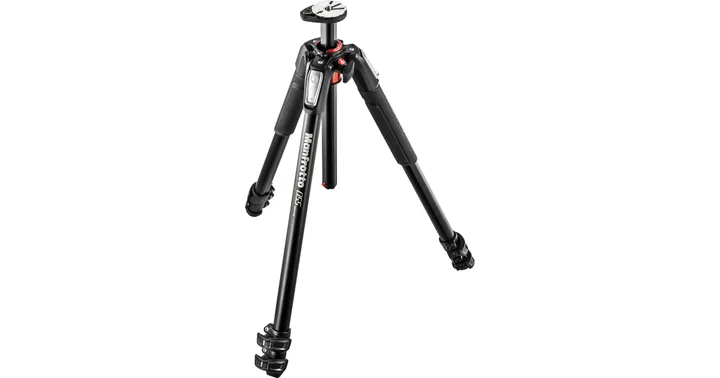
Manfrotto MT055XPRO3
Studio reference, head sold separately
A studio workhorse. The center column flips to 90 degrees horizontal in seconds for rock-solid overhead work, and the legs are far stiffer than anything at the budget tier. Buy a quality ball head separately (around $100). Built to outlast several cameras.
Who it's for: Working studios wanting maximum rigidity
- Center column
- Flips to 90 degrees horizontal
- Head
- Sold separately
- Legs
- Aluminum, 3-section
- Load
- Up to ~20 lb
Pros
- Very rigid aluminum legs
- Quick 90-degree horizontal column
- Built to last for years of daily use
Cons
- Head sold separately (~$100 more)
- Heavy
The verdict
Jewelry is shot at small apertures and slow shutter speeds, so a solid tripod is not optional - handheld shake destroys macro detail. The killer feature for jewelry is a center column that swings horizontal for overhead flat lays without a boom arm. The Vanguard Alta Pro 2+ nails this at a fair price.
Wondering what a shoot costs instead of buying gear? See our jewelry photography pricing guide.